
Thesis Editing Services Canada: What to Look for in 2026
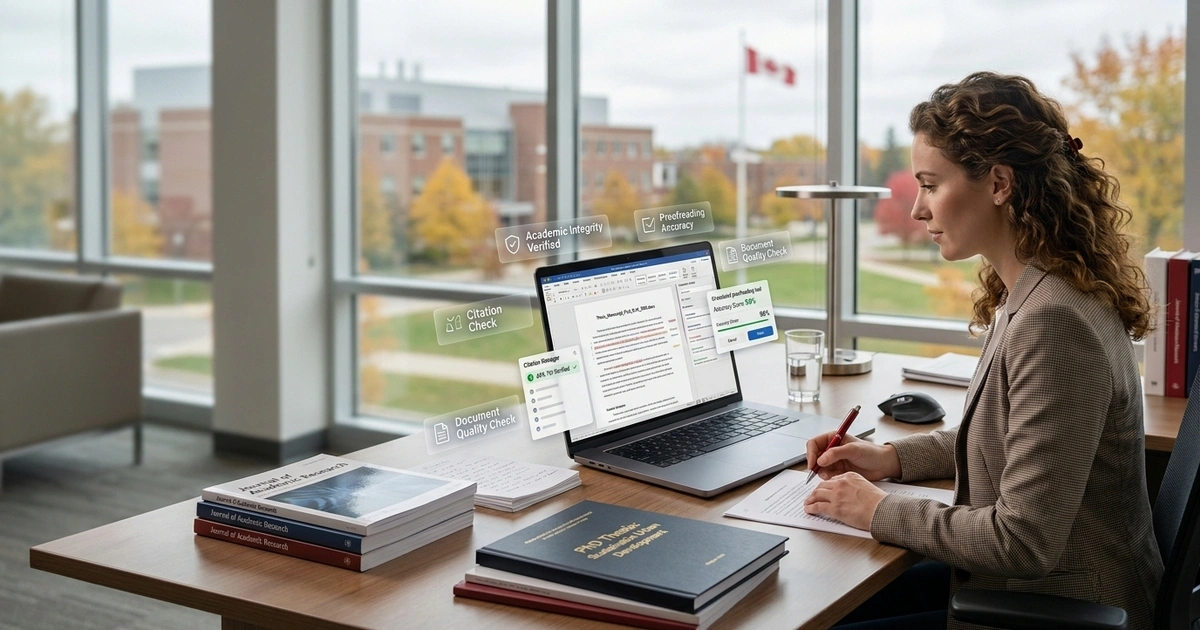
Every graduate thesis moves through the same final stretch: research is done, chapters are written, and the only thing standing between you and your defense is how clean the manuscript reads. Committees notice inconsistent formatting, unclear sentences, and citation errors faster than most students expect, and those issues can slow down an otherwise strong thesis. This is why more Canadian graduate students are turning to professional editors before submission rather than after a first round of feedback.
Choosing the right thesis editing services in Canada in 2026 isn’t just about finding someone who fixes grammar. It means finding an editor who understands your discipline, follows the style guide your program requires, and works within your actual deadline. The sections below break down exactly what to check before you commit to one.
Know Whether You Need Editing or Proofreading
Students often ask for one when they actually need the other. Knowing the difference before you contact anyone saves time and money.
What Editing Covers
An editor works on structure, clarity, flow, and how well each section supports your argument. This is the deeper pass most theses need before a first submission.
What Proofreading Covers
A proofreader checks grammar, spelling, punctuation, and formatting consistency. This is the final pass, done after your content and structure are already settled.
If your chapters still need reorganizing or your arguments need tightening, editing is what to look for. If your thesis is complete and you just need a final check, thesis proofreading services are the better fit. Most students need both, in that order, not at the same time.
Match the Editor to Your Style Guide
There’s no single national thesis format in Canada. Each university, and often each program, sets its own style requirements.
Know Your Required Style
Social science theses typically follow APA, humanities lean toward MLA or Chicago, science and engineering often use Vancouver or IEEE, and law programs follow the McGill Guide. Confirm which one your department requires before you hire anyone.
Confirm the Editor Knows It
Ask directly whether the editor has worked with your specific style guide, not just academic editing in general. Citation formatting mistakes are one of the most common reasons theses get sent back for revisions.
Not every thesis writing service tracks these differences closely, so this is worth confirming upfront rather than assuming it’s covered.
Check for Subject and Language Fit
An editor who understands your field will catch errors a generalist misses, from mislabeled variables to incorrect terminology.
Discipline Knowledge
A thesis in biochemistry needs different editing instincts than one in political theory. Ask whether the editor has worked on theses in your subject area before, not just academic writing in general. A PhD thesis writer in your discipline will also recognize argument gaps a general editor might overlook.
Bilingual Requirements
Some Canadian universities require or accept both English and French submissions, particularly in Quebec and at bilingual institutions. If this applies to you, confirm the editor works in both languages or has a verified process for French academic writing.
Subject fit and language fit both affect accuracy. Skipping this check is one of the easiest ways to end up with a technically clean thesis that still reads off.
Ask for a Sample Before You Pay
A short sample edit tells you more about quality than any review or testimonial ever will. Before committing to a full thesis edit, do this:
- Request a real sample. Most reputable editors offer a free or low-cost trial, usually 300 to 500 words. Send an actual section from your thesis, not a paragraph you’ve already cleaned up.
- Check how changes are marked. Look for Track Changes or a similar system, so you can see exactly what was edited and why, not just a rewritten paragraph with no explanation.
- Compare more than one editor. If you’re deciding between options, run the same sample past two of them. The difference in approach usually becomes clear within a few paragraphs.
A good sample tells you more in five minutes than a pricing page ever will.
Confirm the Delivery Date
Standard turnaround for a full thesis, depending on length, usually falls between 5 and 10 business days. Don’t rely on a verbal estimate.
Confirm Standard Delivery
Ask for an exact date, not a range, once you know your word count. Editors handling a 30,000-word thesis need more than a weekend, even with expedited service.
Build in a Buffer
Leave at least two weeks between receiving your edited thesis and your committee deadline. This covers your own review, any revisions your editor flags, and last-minute formatting checks.
Rushed editing tends to miss more than it catches. A confirmed date, not a rough promise, is what protects your defense timeline.
Confirm Their AI Policy
Many Canadian universities now require students to disclose where AI tools were used in preparing a thesis. Your editing choice can affect that disclosure.
Ask in Writing
Find out whether the editor uses AI at any stage, whether for suggestions, formatting, or a first pass. Some services blend AI tools with human review without stating this clearly upfront.
Check for Human-Only Options
If your program requires confirmation of human-only editing, ask whether the service can provide that in writing. Not all thesis editing services Canada students rely on offer this by default, so it’s worth confirming before you submit your document.
Match the Policy to Your Institution
Every graduate program handles AI disclosure differently. Check your own department’s policy first, then choose an editor whose practices align with it.
Get Your Exact Cost Upfront
Thesis editing is usually priced per word, which makes it easier to estimate your total cost upfront. A custom quote isn’t automatically a red flag, but it does mean you won’t know your exact price until after you submit your document.
| Pricing Model | What It Signals |
| Per-word rate with instant calculator | Transparent, easy to budget before committing |
| Custom quote after document review | May reflect complexity, but delays your decision |
| Flat rate regardless of subject | Simple, but may not account for specialized editing needs |
Ask for your exact cost before you submit your thesis, not after. For a full breakdown of what thesis services cost in Canada this year, see our thesis writing service cost guide for 2026.
Common Mistakes to Avoid
These are the most common ways students end up frustrated with the editing process, even after paying for it.
- Choosing on price alone: The lowest quote doesn’t always mean the best fit. A cheaper edit that misses errors your committee catches costs more time than it saves.
- Skipping the sample: Committing to a full edit without testing the editor’s approach first is one of the easiest mistakes to avoid and one of the most common.
- Confusing editing with proofreading: Ordering proofreading when your thesis still needs structural work leaves the real problems untouched. Confirm which one you actually need before you submit anything.
- Submitting too late: Editors need real time to do the job properly. Leaving it until the week before your deadline limits your options and your editor’s ability to catch everything.
Most students who look back on the process say the same thing: getting thesis editing help earlier and asking more questions upfront would have saved them both time and stress.
Frequently Asked Questions
How much does thesis editing cost?
Pricing typically runs between $0.02 and $0.06 per word, depending on how much work the document needs. A standard 30,000-word master’s thesis usually costs between $600 and $1,500, while longer PhD dissertations cost more due to length and complexity.
Can I hire someone to edit my dissertation?
Yes, but the rules vary by institution. Most universities allow you to hire an editor for grammar, clarity, and formatting, as long as they don’t rewrite your arguments or restructure your chapters. Check your program handbook and get your supervisor’s approval before hiring outside help.
How long does thesis editing take?
Turnaround depends on word count and the depth of the edit. A full thesis usually takes one to three weeks for a professional editor, though light proofreading can be completed faster than a full structural edit.
What’s the difference between editing and proofreading?
Editing addresses structure, clarity, and flow. Proofreading catches surface-level errors like spelling, grammar, and punctuation after the content is already finalized. Most theses go through both, in that order.
Conclusion
Choosing a thesis editor comes down to a few clear checks: know what you actually need, confirm the editor’s fit for your subject and style guide, test their work with a sample, and get your timeline and pricing in writing before you commit. None of these steps take long, but skipping them is what usually leads to delays later.
If you’re comparing thesis editing services Canada has to offer this year, use this list as your starting point rather than relying on reviews alone. A bit of thesis help at the right stage can make your defense far less stressful than it needs to be.

Liam Parker is a Canadian academic writing specialist with over a decade of expertise guiding students in overcoming their most difficult academic obstacles. At ThesisWriter.ca, he specializes in thesis composition, dissertation help, and research consultation, transforming challenging deadlines into guaranteed submissions. Liam has been helpful numerous Canadian students at various universities in attaining their academic objectives with clarity and precision. His writing is methodical, evidence-based, and consistently centered on students. Regardless of whether you are struggling with Chapter One or refining your final manuscript, Liam provides the essential expert assistance you require.